Facebook
 X
X
 Pinterest
 Copy Link
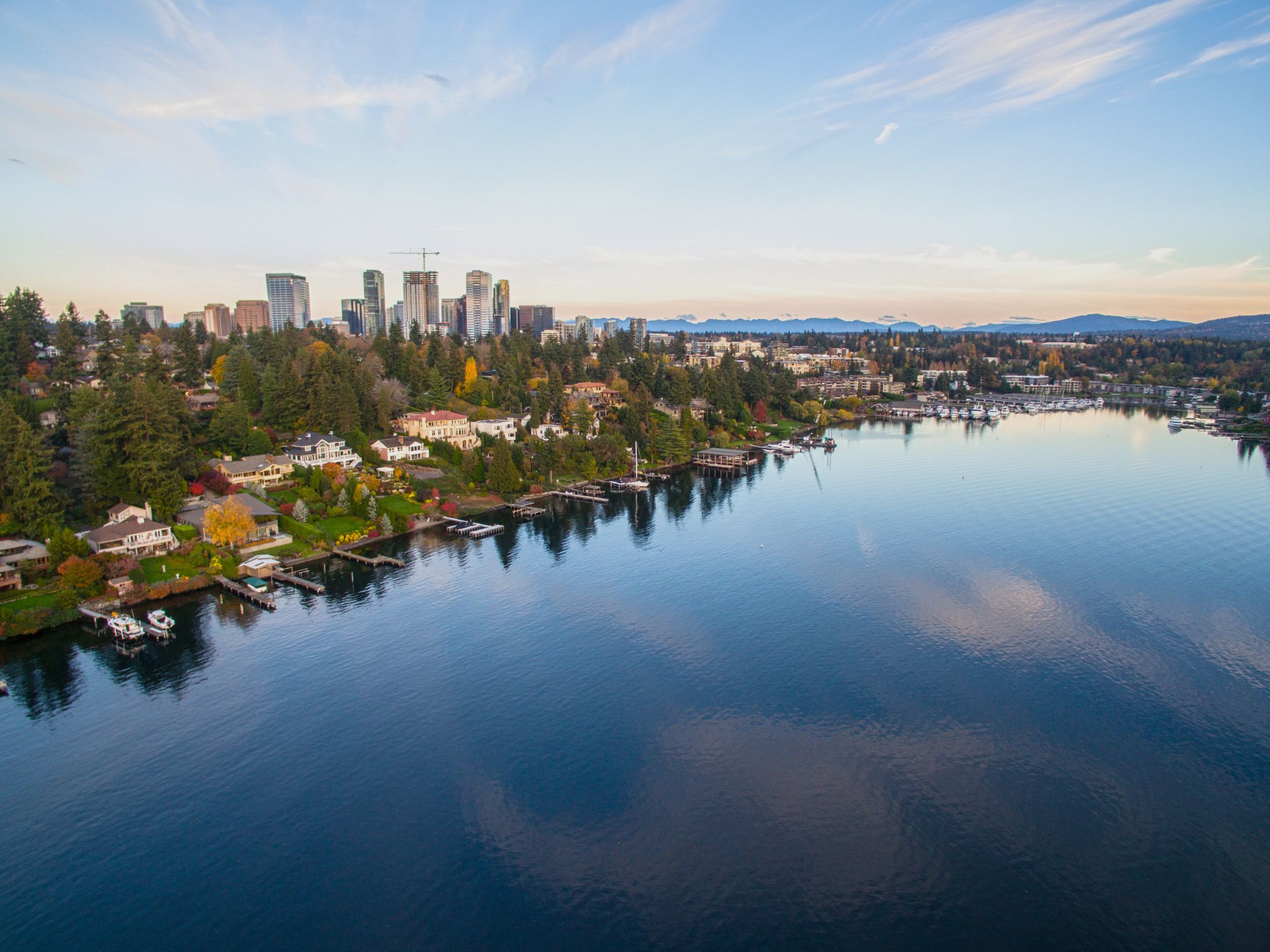
Lake Washington waterfront real estate requires a different level of due diligence from a typical residential purchase. The house, land, shoreline, dock, exposure, legal rights, and permit history all need their own evaluation.
A waterfront listing can look straightforward while raising questions that may not come up anywhere else. How deep is the water at the dock? How practical is the route from the house to the lake? Is the bulkhead in good condition? Do the dock and boat lift match the permit history? Are there shared access rights? If you want to remodel, how do shoreline rules, slopes, trees, and setbacks affect the plan?
Location adds another layer. Lake Washington touches multiple jurisdictions, including Seattle, Mercer Island, Bellevue, Kirkland, Medina, Hunts Point, Yarrow Point, and Renton. Washington’s Shoreline Management Act provides the statewide framework, while local governments administer Shoreline Master Programs and property-specific permitting. Requirements can therefore change as you move around the lake.
I live on Mercer Island and have spent more than 15 years working in real estate across Mercer Island, Bellevue, Seattle, and the surrounding region. With waterfront property, I prefer to narrow the search in stages: first the location, then the shoreline, and finally the exact rights and improvements attached to the property.
What Does “Waterfront” Mean on Lake Washington?
“Waterfront” is a starting point, not a complete description of what a buyer owns or can use.
A direct-waterfront home generally has shoreline associated with the parcel. Other properties may offer shared waterfront, deeded beach access, association access, community moorage, an assigned slip, or a view without direct water access. Properties on bays, canals, and inlets may function differently from open-lake frontage as well.
The legal documents come later in the diligence process, but the distinction should be clear before you start comparing one “waterfront” listing with another.
Lake Washington Waterfront Homes by City: Mercer Island, Bellevue, Seattle & Kirkland
Lake Washington is too varied to treat as one real estate market.
The relationship between the house and the water changes from Mercer Island to Bellevue, from Kirkland to Seattle, and sometimes from one block to the next. Shoreline orientation, bank height, housing stock, road access, nearby activity, and dock conditions can differ substantially even within the same city.
Mercer Island Waterfront Real Estate: Comparing Shoreline Orientation
Mercer Island waterfront real estate varies significantly by shoreline. West-facing homes may offer later-day sun and Seattle views, while east-facing properties look toward Bellevue; northern and southern locations bring different exposure, boat traffic, and lake widths. Beyond direction, buyers should compare elevation, trees, neighboring structures, and the route from the house to the water, since two homes with similar frontage can function very differently.
For broader information about homes, neighborhoods, and real estate on the island, see my Mercer Island real estate guide.
Bellevue, Medina, Hunts Point & Yarrow Point Waterfront Homes
On the eastern shore of Lake Washington, I would separate Bellevue waterfront homes from Medina, Hunts Point, and Yarrow Point rather than putting everything under an “Eastside waterfront” label.
Bellevue itself includes several waterfront settings. Open-lake frontage around West Bellevue feels different from property in or near Meydenbauer Bay. Enatai creates another location and access pattern farther south. The shape of the shoreline affects views, exposure, boat activity, and how directly a dock reaches open water.
Medina, Hunts Point, and Yarrow Point add their own point and peninsula settings. A property tucked into a more protected shoreline can behave differently from one facing a broad stretch of Lake Washington. Road access, lot shape, bank height, shoreline frontage, neighboring docks, and proximity to Downtown Bellevue all deserve comparison.
For more local context, see my Bellevue real estate guide and Clyde Hill, Medina and Yarrow Point guide.
Kirkland Waterfront Homes on Lake Washington
Kirkland waterfront homes deserve their own section because the city offers another distinct stretch of Lake Washington rather than simply being part of a broad Eastside category.
Around Downtown Kirkland and West of Market, waterfront can place a buyer close to restaurants, shops, parks, and the urban center while still providing private shoreline or moorage. Farther north around Juanita, the shoreline, surrounding housing, road pattern, and relationship to the city center change.
That creates a different comparison from Mercer Island or the point communities. A buyer may care about walking into Downtown Kirkland as much as the width of the lake view. Another may give up proximity to the center for a particular dock configuration, lot, or shoreline orientation.
See my Kirkland real estate guide for more on the broader market.
Seattle Waterfront Homes on Lake Washington
On the western shore, Seattle waterfront homes on Lake Washington appear in and around Laurelhurst, Windermere, Madison Park, Denny-Blaine, Leschi, Mount Baker, Seward Park, Rainier Beach, Cedar Park, and other shoreline areas.
That geography produces a wide range of property types. Some homes have open-water frontage. Others sit near bays, parks, marinas, steep slopes, or busier roads. A property’s elevation may create a wider view while adding considerable separation between the house and shoreline.
For the broader city market, see my Seattle real estate guide.
How Lake Washington Shoreline Orientation Affects Sun, Views, Wind & Boat Traffic
Shoreline direction affects much more than the view.
A property’s orientation can influence morning and afternoon light, wind exposure, waves, privacy, boat activity, and how comfortable the outdoor areas feel at different times of day. The same general compass direction can also produce different results because of trees, terrain, neighboring structures, and the home’s architecture.
I would look at what the view depends on. If a significant portion relies on neighboring vegetation remaining trimmed, or on a lower property never changing, that deserves consideration. A view that is entirely controlled by the subject property is different from one that depends on conditions beyond the owner’s control.
Wind and wakes influence dock movement, shoreline wear, noise, and comfort near the water. Nearby navigation routes, marinas, public parks, boat launches, clubs, and beaches can change activity levels throughout the day and across the seasons.
Privacy works in both directions. Water can create open space in front of a house, but Lake Washington remains active with boats, paddlers, swimmers, and other recreation. Stand on the dock and look back toward the house. Then consider what someone on the water can see.
A second visit at a different time can be surprisingly useful. A calm Tuesday morning and a sunny Saturday afternoon may tell you different things about the same property.
Low-Bank vs. High-Bank Lake Washington Waterfront
Low-Bank Waterfront
Low-bank waterfront usually describes a shorter or more gradual route to Lake Washington.
For buyers who expect to swim, paddleboard, entertain near the water, or move regularly between the house and dock, that physical access can be a major advantage. It can also create a closer visual connection between the main living areas and the lake.
Low bank does not eliminate diligence. Drainage, shoreline stabilization, water levels, vegetation, privacy, and the condition of any bulkhead or retaining structure still need review.
Easy access also does not establish that the shoreline can be cleared, expanded, regraded, or rebuilt.
High-Bank Waterfront
High-bank waterfront involves greater elevation or separation between the home and lake.
That elevation can create wide views and greater separation from activity on the water, but the tradeoffs may include stairs, steep terrain, retaining systems, erosion concerns, and additional maintenance.
Walk the route to the dock more than once. Count the stairs. Think about carrying boating equipment, paddleboards, groceries for a dock dinner, or anything else you expect to move between the house and shoreline.
Lake Washington Homes With Docks: Piers, Boat Lifts & Moorage
An existing dock answers one question: there is a dock there today.
A buyer still needs to understand its condition, legal status, dimensions, permitted configuration, utilities, wave exposure, water depth, and suitability for the intended boat.
A waterfront-specific inspection may need to look at piles, framing, decking, floats, connections, electrical service, water service, and boat lifts. Deferred maintenance on a dock is a different category from replacing a few boards on a residential deck.
Mercer Island’s current permitting guidance illustrates why scope matters. The city distinguishes among repairs or re-decking without reconfiguration, changes to an existing dock configuration, and new construction or full replacement.
Is the Dock Deep Enough for Your Boat?
If boating is central to the purchase, the boat belongs in the property criteria from the beginning.
Confirm depth at the dock and along the approach. Then compare it with the boat’s draft, lift requirements, usable moorage length, and dock configuration. A dock designed around one vessel may not work for another.
Lake Washington’s elevation also changes. In 2026, the U.S. Army Corps of Engineers began its annual refill from a winter level around 20 feet toward the normal 22-foot spring target, measured using the project’s local datum. USACE notes that lake elevations can also vary because of operating conditions, natural gradient, and wind.
That is why I would not judge water depth from a single showing in a single season.
Shared Docks and Community Moorage on Lake Washington
A shared dock requires a different review from private moorage.
The recorded documents should establish access, assigned slips if applicable, maintenance responsibilities, repair decisions, insurance, cost sharing, guest use, and any restrictions on vessels or transfer rights.
A community dock may be a great fit for a buyer who wants boat access without maintaining an individual pier. It should not be valued or described as equivalent to private moorage unless the property rights support that conclusion.
Lake Washington Dock Permits and Shoreline Rules
Waterfront improvements can involve several layers of regulation.
Local cities administer shoreline and building rules. Washington Department of Fish and Wildlife requires a Hydraulic Project Approval for qualifying work in or near state waters, including many dock, pier, float, bulkhead, and shoreline projects. Federal authorization through the U.S. Army Corps of Engineers may apply to certain work. Washington Department of Natural Resources can also be involved when a project uses state-owned aquatic lands.
A project that qualifies for an exemption from a shoreline substantial development permit may still require local review and still has to comply with the applicable shoreline regulations. “Exempt” should not be read as “unregulated.”
The requirements depend on the exact property and proposed work, which is why the dock next door is not evidence that the same dock can be built on the property you are considering.
Permit History and Future Renovation Feasibility
For an existing home, I would want to understand the history of major waterfront improvements before relying on them.
That can include docks, boat lifts, bulkheads, retaining systems, shoreline work, stairs, decks, and additions to the house. Approved plans should be compared with what exists today.
A missing online record does not automatically mean an older structure was illegal. Older docks and shoreline improvements may require additional research. The practical question is whether the buyer understands what exists, what documentation supports it, and what rules could apply when repair or replacement becomes necessary.
Renovation plans belong in this conversation too. Shoreline setbacks may be only one constraint. Critical areas, steep slopes, lot coverage, building height, trees, drainage, and existing nonconforming improvements can affect what is feasible.
A large remodeled waterfront home nearby proves only that the neighboring home exists. It does not establish what can be approved on the property you are buying.
Lake Washington Bulkheads, Shoreline Stabilization & Erosion
Lake Washington shorelines can look very different from one property to the next. Some have a natural shoreline, while others use rock, bulkheads, seawalls, or softer forms of stabilization. Washington Department of Ecology guidance generally favors softer methods when they are practical for the site.
Buyers should look at the condition of any existing shoreline structure, along with drainage, permit history, and how much useful life may be left. If a bulkhead or other marine structure needs a closer review, a marine contractor, structural engineer, or other specialist can help.
Trees and Shoreline Vegetation on Lake Washington Property
Trees and shoreline plants can help with drainage, erosion control, privacy, habitat, and views. Because trimming or removal may be regulated, buyers who are planning a remodel or hoping to open up a view should check local rules before making plans that depend on major vegetation changes.
What to Inspect in a Lake Washington Waterfront Home
Waterfront location does not mean every home has the same problems, but several parts of the structure deserve close attention.
Lower levels, crawlspaces, foundations, exterior doors and windows, decks, waterproofing, drainage, and retaining systems should be examined with the site conditions in mind. Areas with greater wind or recurring moisture exposure may deserve closer inspection as well.
For a remodeled or expanded property, compare permit records with the current house. New finishes tell you very little about whether work included the foundation, building envelope, utilities, drainage, or structural systems.
Do Lake Washington Waterfront Homes Need Flood Insurance?
Waterfront location alone does not determine flood-insurance requirements.
Check the exact address and current mapping. FEMA identifies its Flood Map Service Center as the official source for National Flood Insurance Program hazard information. King County’s iMap also allows a buyer to review parcel-level mapping and flood-related layers.
Insurance deserves attention during the contingency period, not just before closing. A buyer should obtain a property-specific quote and ask how the policy treats the main residence as well as docks, shoreline structures, retaining systems, and other improvements.
For high-value Lake Washington waterfront homes, working with an insurance professional familiar with waterfront property can help identify exclusions or coverage differences before they become a closing-day surprise.
Can You Boat From Lake Washington to Puget Sound?
Yes. Lake Washington connects to Puget Sound through the Lake Washington Ship Canal and Hiram M. Chittenden Locks.
The U.S. Army Corps of Engineers describes the canal as an approximately eight-mile route connecting Lake Washington with Puget Sound. The Locks manage the transition between freshwater and saltwater and are part of the route used by recreational and commercial vessels.
For a buyer who expects to make that trip regularly, the question here is route practicality rather than dock fit, which should already have been evaluated at the property. Consider travel time, vessel constraints along the route, bridge considerations, fuel and service access, and current Locks procedures.
What Determines Lake Washington Waterfront Home Value?
Lake Washington waterfront homes are not valued by square footage alone. The amount and usability of the shoreline, bank type, dock condition, water depth, moorage, views, privacy, road access, lot layout, home condition, permit history, and waterfront rights can all affect value.
Two homes may have similar shoreline frontage but still be very different. A level property with easy water access and protected moorage may compare differently from a home with a long staircase to a more exposed dock. The best comparable sales should reflect those property-specific differences.
Lake Washington Waterfront Sales by City: Mercer Island, Bellevue & Kirkland
Market statistics are useful here only when the sample behind them is clear.
The latest completed quarterly Waterfront Market Report from Windermere Mercer Island was published in July 2026 and uses Northwest Multiple Listing Service data. It reported six Mercer Island waterfront closings during Q2 2026, with sale prices ranging from about $7.4 million to $15.85 million.
The same report grouped 14 Lake Washington-area sales under its “Eastside Waterfront” data table. For this article, I would regroup those transactions by the places buyers are more likely to search rather than using “Eastside” as the headline category. Based on the communities identified in the report, the Q2 sales break out as follows:
| Lake Washington Area | Q2 2026 Closings | Sale-Price Range |
|---|---|---|
| Mercer Island | 6 | Approx. $7.4M to $15.85M |
| Bellevue and Enatai | 2 | Approx. $3.8M to $6.4M |
| Kirkland, West of Market and Juanita | 6 | Approx. $5.0M to $11.4M |
| Medina, Hunts Point and Yarrow Point | 4 | Approx. $8.8M to $38.0M |
The remaining two transactions in that 14-sale group were identified as Renton and Kennydale. The report’s Seattle waterfront section combines Lake Washington properties with Puget Sound waterfront, so I would not use its overall Seattle sales count as a Lake Washington statistic.
That distinction is important. A broad waterfront report is useful for context, but a valuation for a specific home should go back into NWMLS and narrow the comparison further. Direct waterfront should be separated from shared access. Open-lake frontage should be distinguished from bays or inlets when there are enough transactions to support the comparison.
Six sales on Mercer Island, two in a Bellevue subset, or four among Medina, Hunts Point, and Yarrow Point also show why waterfront medians can move sharply. One unusually large property or high-value sale can change the headline number when the sample is small.
You can see current homes represented by David Hogan Homes on the properties page.
Frequently Asked Questions About Lake Washington Waterfront Real Estate
What should I check before buying a Lake Washington waterfront home?
Review the shoreline and bank, dock and water depth, permit history, waterfront rights, slope and drainage, house condition, insurance, exposure, and relevant comparable sales. Add specialist inspections based on the property.
What is the difference between low-bank and high-bank waterfront?
Low-bank generally describes a shorter or more gradual route to the water. High-bank involves greater elevation or separation. The grade, number of steps, slope condition, view, and usability of the route to the shoreline are more informative than the label alone.
Can I build or expand a dock on Lake Washington?
Possibly. Approval depends on the property, jurisdiction, shoreline designation, design, environmental requirements, and applicable local, state, and federal review. A neighboring dock does not establish what will be allowed on your parcel.
Does an existing dock mean it is permitted?
No. Review local permit records and compare them with the existing structure. Older docks may require historical research, and rules for a future repair or replacement may differ from those that applied when the dock was constructed.
What agencies regulate Lake Washington docks?
The local city administers shoreline and building rules. WDFW may require a Hydraulic Project Approval, federal authorization may apply through the U.S. Army Corps of Engineers, and DNR may be involved when state-owned aquatic lands are affected.
How do I know whether the water is deep enough for my boat?
Confirm measured depth at the dock and along the approach, then compare it with your vessel’s draft, lift requirements, and moorage configuration. Account for seasonal lake-level changes rather than relying on what you see during one showing.
Which side of Lake Washington gets afternoon sun?
Look at the direction the individual shoreline faces rather than using the city or neighborhood as a shortcut. Western-facing exposure generally receives later-day sun, but trees, terrain, nearby structures, architecture, and seasonal sun angles can change the result.
Can you boat from Lake Washington to Puget Sound?
Yes. Boats can travel through the Lake Washington Ship Canal and Hiram M. Chittenden Locks to Puget Sound, subject to current vessel and operating requirements.
Do Lake Washington waterfront homes require flood insurance?
Not solely because they are waterfront. The answer depends on the mapped flood zone, lender requirements, insurance terms, and property-specific conditions. Check the current FEMA information for the exact property and obtain a quote before closing.
What inspections should a waterfront buyer order?
Begin with a general home inspection, then add specialists based on the property. Dock condition, slopes, drainage, retaining systems, shoreline structures, trees, boundaries, or structural concerns may each require a different professional.
What makes one Lake Washington waterfront home more valuable than another?
Usable shoreline frontage, bank type, dock and moorage, water depth, exposure, views, privacy, lot condition, access, construction quality, legal rights, permit history, and comparable sales all contribute. The quality of the connection between the house and the water is often as important as the amount of frontage.
A Lake Washington waterfront search should eventually come down to one question: does this specific property support the way you intend to use it?
If you’re considering a waterfront home on Mercer Island, in Bellevue, Kirkland, Seattle, or elsewhere around Lake Washington, reach out here. I’m happy to talk through the property before you get too attached to the kitchen.