Facebook
 X
X
 Pinterest
 Copy Link
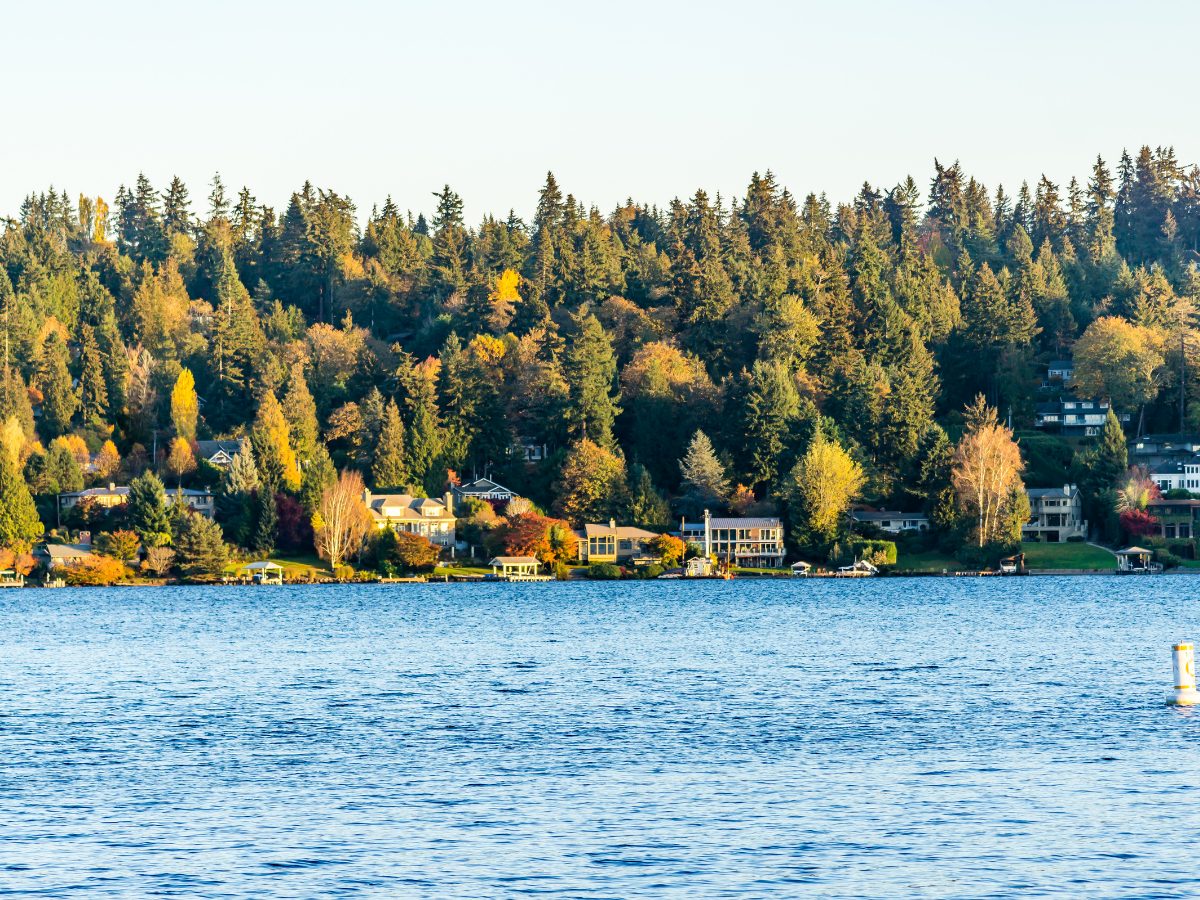
This Mercer Island neighborhood guide is designed to help you understand how different parts of the island compare. Mercer Island is small enough that you can drive from one end to the other fairly quickly, but buying a home here is much more address-specific than the map suggests.
Most conversations about Mercer Island neighborhoods start with three broad areas: the North End, Mid-Island, and South End. From there, people often describe a property as East Mercer, West Mercer, or somewhere along the central Island Crest corridor.
Those descriptions are useful starting points. They aren’t precise boundaries.
Two homes a few streets apart can have very different light, views, road noise, slopes, driveway access, lot usability, and renovation histories. For waterfront homes, the differences get even more specific. Shoreline conditions, bank height, dock configuration, exposure, and access to the water can matter far more than the neighborhood label.
That’s the best way to approach a Mercer Island home search: start broad, then get very specific.
How Mercer Island Neighborhood Names Work
There isn’t one universally accepted map of the neighborhoods in Mercer Island.
Some names describe large geographic sections of the island. Others come from older plats, historic neighborhoods, residential pockets, or terminology that residents and real estate listings have used over time. Mercer Island City documents themselves reference areas including East Seattle and First Hill, while locally used names extend well beyond a single official neighborhood framework.
The easiest way to understand the island is through two overlapping systems.
One divides it north to south:
- North End
- Mid-Island
- South End
The other describes orientation across the island:
- East Mercer
- West Mercer
- Interior or Island Crest corridor
A home can fit both descriptions. A property might be on the South End and West Mercer, for example.
Mercer Island itself is a little over five miles long and roughly two miles wide, with most multifamily housing and the commercial core concentrated toward the northern end.
North End and Town Center
North Mercer Island is the part of the island most directly connected to I-90, Town Center, Mercer Island Station, shops, restaurants, and services.
That access is the biggest geographic distinction between the North End and locations farther south. From many North End streets, you’re starting closer to the island’s main transportation corridor before you’ve even pulled out of the driveway.
The housing also changes as you move through the area. Town Center contains most of Mercer Island’s condominium, apartment, and mixed-use buildings. Surrounding residential streets offer a much broader range of single-family homes, from older houses and remodeled properties to substantial newer construction.
Town Center
Town Center functions as Mercer Island’s commercial and mixed-use core rather than a conventional single-family neighborhood.
This is where buyers will find the island’s largest concentration of restaurants, shops, services, multifamily housing, and the Mercer Island light rail station. For someone who wants to walk to more destinations or minimize the trip to transit, starting the search here makes sense.
Condo buyers need to look beyond the unit itself. Review:
- Association reserves and recent financial statements
- Master insurance coverage and any owner insurance requirements
- Pending or recent special assessments
- Building maintenance and major capital projects
- Parking and storage
- Rental restrictions
- Meeting minutes and known building issues
A nicely renovated unit can still come with a building-level expense that materially changes the purchase.
East Seattle
East Seattle is a historic neighborhood name for part of the western North End. The name dates back to Mercer Island’s early development, when C.C. Calkins platted the town of East Seattle on the western side of the island in 1891.
Today, buyers will encounter a mix of older homes, extensively remodeled properties, and newer construction.
Its location puts parts of East Seattle near Town Center and I-90, but individual streets vary. A house with western exposure may have Seattle or Lake Washington views, while another property nearby may be screened by trees or neighboring homes.
Freeway sound, elevation, slope, view protection, lot configuration, and the quality of past renovation work all deserve an address-level review.
First Hill
First Hill is another North End name, generally referring to the northwest part of Mercer Island near Town Center.
Elevation is an important variable here. Streets that look close together on a map can feel quite different because of grade, access, and orientation.
For a First Hill property, I’d pay close attention to the route to and from the house, driveway grade, retaining systems, view exposure, and the home’s relationship to I-90. Those details tell you considerably more than the neighborhood label alone.
Mid-Island and the Island Crest Corridor
Mid-Island is a broad central section of Mercer Island rather than one uniform neighborhood.
Island Crest Way provides the main north-south spine through much of this part of the island. Buyers looking here are positioned between the North and South Ends, with neighborhoods and residential streets branching away from the central corridor.
Useful reference points include Island Crest Park, Deane’s Children’s Park, Groveland Beach, and the northern portion of Pioneer Park.
The differences from street to street can be substantial. Look at road exposure, elevation, lot shape, park access, driveway configuration, trees, renovation history, and what could potentially be built or remodeled nearby.
Mercerwood
Mercerwood is a locally recognized Mid-Island name, but I wouldn’t use it as though it has a hard boundary.
It’s generally associated with a central portion of the island around parts of the Island Crest corridor. Where Mercerwood begins and ends can vary by map, resident, or listing description.
If a listing says “Mercerwood,” use that as geographic context, then verify the actual address and property characteristics.
South End
The biggest geographic difference on the South End is access. Homes here are farther from I-90, Town Center, and Mercer Island Station, so trips north generally take longer.
That makes it worth testing the drive from any property you’re considering. A map won’t show every turn, narrow stretch of road, steep driveway, or private-access arrangement.
The South End also isn’t one type of housing. You’ll find interior homes, hillside properties, waterfront homes, established residential streets, and properties reached by private or shared roads. Pioneer Park, Clarke Beach, South Mercer Playfields, and Island Point are useful reference points when getting oriented.
Island Point
Island Point is one of the neighborhood names buyers may encounter in the southern part of Mercer Island. As with many Mercer Island neighborhood names, its boundaries are better treated as approximate than official.
For homes throughout the South End, review road ownership, private-road responsibilities, shared-driveway agreements, drainage, retaining walls, slope, service access, and any neighborhood or association obligations.
Don’t assume that “South End” automatically means a larger lot, greater privacy, or a certain price range. Those characteristics vary from property to property.
East Mercer vs. West Mercer
East Mercer and West Mercer are broad descriptions of location and orientation. Neither is a single neighborhood, and neither side is automatically more valuable.
The useful comparison is physical: which direction does the property face, how does the site sit on the land, what is the light like, where are the views, how steep is the property, and how does the house connect to the rest of the island?
West Mercer
West Mercer is the logical place to start if Seattle-facing or western exposure is high on your list.
Depending on elevation and the individual lot, western properties may offer Lake Washington, Seattle skyline, Olympic Mountain, or sunset-oriented views. Waterfront homes run along portions of the western shoreline, while elevated properties farther inland can also capture broad western outlooks.
Afternoon and evening light can be a major part of the appeal.
But a “Seattle view” in a listing can mean many different things. Stand in the rooms where you’ll spend your time and look at:
- Width of the view
- Tree coverage
- Neighboring houses and rooftops
- Seasonal foliage
- Elevation
- Utility lines
- Potential redevelopment on nearby lots
Topography matters too. Some West Mercer properties have steep slopes, retaining systems, narrow road approaches, or driveway conditions that affect both current use and future projects.
East Mercer
East Mercer is the natural starting point for buyers comparing eastern exposure and views toward Bellevue.
Eastern orientation can bring stronger morning light. Depending on elevation, trees, and the house itself, views can extend across Lake Washington toward Bellevue and the Eastside.
East Mercer includes waterfront, hillside, wooded, and interior properties, so conditions vary considerably even along the same general side of the island.
For an East Mercer home, look carefully at drainage, trees, driveway access, slope, shoreline conditions when applicable, and the route back toward Town Center and I-90.
The city’s planning documents specifically note steep slopes, narrow ravines, small watercourses, and undeveloped residential land along portions of both East and West Mercer Way.
That is exactly why the individual site deserves more attention than the words “East Mercer” or “West Mercer” on a listing.
Smaller Mercer Island Areas and Neighborhood Names You’ll Hear
A few names come up repeatedly in listings and local conversations:
East Seattle: A historic North End area on the western side of Mercer Island.
First Hill: A northwest Mercer Island area near Town Center, with substantial differences in elevation and access within a relatively small geographic area.
Mercerwood: A locally used Mid-Island name with boundaries that vary depending on the source.
Island Point: A South End neighborhood near the southern portion of the island.
Town Center: Mercer Island’s commercial and mixed-use core, where most condominium and multifamily options are concentrated.
Those definitions are intentionally approximate. You’ll find other neighborhood and plat names as you search, too. Mercer Island has never operated with one neighborhood map that neatly answers every location question.
Choosing a Mercer Island Area Based on Your Priorities
There isn’t much value in declaring one “best neighborhood on Mercer Island.” A better starting point is deciding which property characteristics matter enough to shape your search.
If access to Town Center, I-90, and transit is high on the list, begin with the North End.
If you want a central position between north and south, look closely at Mid-Island and the Island Crest corridor.
For western exposure and Seattle-facing view opportunities, start with West Mercer. For eastern light and Bellevue-facing orientation, East Mercer is the natural comparison.
If you’re comfortable with a longer trip to I-90, the South End opens another set of streets, sites, waterfront locations, and property types to consider.
For waterfront buyers, I’d move the neighborhood name farther down the checklist. Compare shoreline access, bank type, dock, water depth, exposure, moorage, stairs to the water, and the physical characteristics of the lot.
You can also browse David Hogan Homes’ current properties to see how location and property type differ across the market.
Mercer Island Schools
School assignment should be checked by exact address.
Don’t rely on a neighborhood name, an old listing description, or the school information carried over from a previous sale. Boundaries and assignments can change, and informal neighborhood names don’t necessarily correspond to school boundaries.
The same rule applies to a house sitting very close to a school. Geographic proximity doesn’t confirm assignment.
Mercer Island Property Factors That May Matter More Than the Neighborhood
On Mercer Island, some of the biggest differences between two homes have little to do with the neighborhood name.
Waterfront Characteristics
Mercer Island waterfront neighborhoods extend around much of the island’s perimeter, but waterfront is far from a uniform property type.
Investigate shoreline access, bank height, dock condition and configuration, water depth, moorage, exposure, steps to the waterfront, shoreline structures, and permit history.
A level approach to the lake and a steep-bank property with a long stair system provide very different ownership experiences even when their map locations look similar.
View Quality
“View home” isn’t specific enough.
Look at the direction and width of the view, elevation, window and room placement, neighboring trees, seasonal foliage, utility lines, rooftops, and future construction potential.
Then return at a different time of day if natural light is a deciding factor. A west-facing living room at 5 p.m. tells you something a noon showing can’t.
Topography and Drainage
Slopes and ravines are a normal part of Mercer Island’s geography in many locations.
Review drainage and water movement, retaining walls, driveway grade, geotechnical information when applicable, and access for future repairs or construction.
A hillside can help create a spectacular outlook. It can also add engineering, maintenance, and construction considerations that should be understood before the purchase.
Lot Configuration
The square footage written in a listing tells only part of the lot story.
Width, shape, setbacks, slope, trees, critical areas, utilities, easements, driveway placement, and access can all affect how much of a site is practically usable.
That distinction matters if you’re thinking about an addition, major remodel, outdoor project, or new construction.
Street and Property Access
Walk and drive the approach to the property rather than evaluating access from the listing photos.
Confirm whether the road is public or private, who maintains it, whether the driveway is shared, where guests can park, whether delivery and moving vehicles have turning space, and how a steep driveway might function in wet or winter weather.
Home Age and Renovation History
Mercer Island has homes from many periods of development, plus decades of additions and remodels.
A house that looks updated isn’t necessarily comprehensively renovated.
Review permits, additions, structural work, plumbing, electrical, roof, windows, HVAC, drainage work, and other major systems. If square footage or configuration changed over time, understand when and how the work was completed.
For buyers who want help working through this level of due diligence, David Hogan Homes outlines the broader process on the Buying Services page.
Mercer Island Home-Buying Checklist
Before making an offer, test the property rather than the pin on the map.
Drive the route to Town Center, I-90, Mercer Island Station, parks, work, and other destinations you’ll use regularly. Visit when light, traffic, or road noise matters most.
Then verify:
- School assignment for the exact address
- Permits and renovation records
- Zoning, setbacks, and lot lines
- Public or private road status
- Easements and shared access
- Drainage and slope
- Retaining walls
- Trees and critical areas
- Driveway grade and vehicle access
- Neighboring development potential
- Major home systems and structural work
For waterfront homes, add shoreline conditions, dock documentation, water depth, bank access, moorage, and relevant permits to that list.
Frequently Asked Questions About Mercer Island Neighborhoods
What are the main neighborhoods of Mercer Island?
A practical way to divide Mercer Island is into the North End, Mid-Island, and South End. Those areas overlap with broader east-west descriptions such as East Mercer and West Mercer. Smaller names including East Seattle, First Hill, Mercerwood, and Island Point are also commonly used.
Are Mercer Island neighborhood boundaries official?
Not in one universally accepted system. Some neighborhood names appear in city documents, local records, and historic plats, but there isn’t a single neighborhood map used consistently by every resident, broker, and listing service.
What is the difference between North and South Mercer Island?
The North End provides the most direct geographic access to I-90, Town Center, Mercer Island Station, shopping, and services. South End properties require a longer route north before reaching the freeway and Town Center. The housing and site characteristics within both areas still vary considerably.
What is the difference between East Mercer and West Mercer?
West Mercer is generally the starting point for Seattle-facing and western exposure, while East Mercer is where buyers typically look for eastern and Bellevue-facing orientation. Light, views, shoreline, slopes, roads, and tree coverage should all be evaluated property by property.
Which Mercer Island areas are closest to Town Center and transit?
Town Center itself and nearby North End streets provide the most direct access. For a particular home, test the real walking or driving route rather than relying on straight-line distance.
Which parts of Mercer Island have Seattle views?
Western and elevated portions of Mercer Island are the natural starting point for Seattle-facing views. The actual view depends on elevation, trees, neighboring construction, rooftops, and the orientation of the rooms and windows.
Which parts of Mercer Island have Bellevue views?
Eastern and elevated properties are the logical starting point for Bellevue-facing views. Tree cover, slope, elevation, neighboring development, and house orientation determine what you’ll see from a specific address.
Are there condominiums on Mercer Island?
Yes. Most condominium and mixed-use housing is concentrated in and around Town Center and the North End. The City also describes multifamily development as being concentrated at the northern end of the island.
What is the best neighborhood on Mercer Island?
Start with the feature that matters most to your search. Choose the North End for the most direct Town Center and transit access, Mid-Island for a central location, West Mercer when western exposure is a priority, East Mercer for eastern exposure, or the South End when a particular property there justifies the additional trip north.
Then make the final comparison at the street and property level.
Does the neighborhood determine a Mercer Island home’s value?
No. Neighborhood provides useful context, but waterfront, views, lot usability, slope, road exposure, home condition, construction quality, renovation history, and comparable sales can create major differences between properties in the same area.
A Mercer Island search usually gets better as it gets more specific. Start with a part of the island, then compare the individual streets, lots, houses, access, light, views, and site conditions that you’ll own.
If you’re comparing a few areas or trying to understand how two very different Mercer Island properties stack up, reach out to David Hogan Homes.